Dyeing Pollutes Rivers. AI Drains Reservoirs. Patchwork Fixes Both.

What if the fabric keeping you warm was also the reason someone else has no clean water?
That is not a hypothetical. That is what is happening right now, across two industries, separated by a century but sharing the same shrinking resource.
Fashion found water in the dye vat. AI found it in the cooling tower. Neither one is giving it back. And the planet that was never as wet as we assumed is running out of time to wait.
We make Patchwork Fabric. We have for over twenty years. And we want to tell you exactly why we were never part of this problem to begin with.

The Bigger Picture: A Planet Already Running Low
Start with the number nobody puts in a press release.
Only 0.5% of all the water on Earth is fresh, accessible, and safe enough to use. That is the ENTIRE budget. Every farm, every factory, every household, every data center, all drawing from the same tiny share.
More than 2 billion people already lack access to safe drinking water. Two thirds of the global population face severe water scarcity for at least part of every year. Global water demand is projected to climb 20 to 50% above current levels by 2050. The US National Intelligence Council has flagged water insecurity as a direct threat to economic stability and political security over the next two decades. Not an environmental footnote. A geopolitical risk.

And it is not only about how much gets taken. Globally, close to 80% of industrial and municipal wastewater is discharged back into rivers and groundwater untreated. Freshwater species populations have fallen by 85% since 1970, the STEEPEST collapse of any ecosystem on the planet.
This is the scoreboard. Every industry playing inside this budget needs to answer one question. Are you part of the problem or not?
India Is Not Watching This From A Distance
Critics of sustainable manufacturing often say this crisis is someone else's problem. We disagree.
India holds nearly 18% of the world's population and only about 4% of its freshwater resources. Our annual per capita water availability has already dropped below 1,700 cubic meters, the internationally recognized threshold for water stressed status. Government data puts the current figure closer to 1,400 to 1,500 cubic meters and falling.
Roughly 600 million Indians already live with high to extreme water stress. Several major cities face severe groundwater depletion within this decade.

We manufacture in Phulera, Rajasthan. This is not abstract geography for us. This is the ground we stand on, the water table beneath our factory floor, the reality our workers go home to. When we say the water budget is shrinking, we do not mean somewhere else. We mean HERE.
Chapter One: The Dye Vat That Never Stopped Drinking
Every new piece of colored fabric begins the same way. A dye bath.
100 to 200 liters of fresh water, per kilogram of textile. A single cotton T-shirt costs the planet over 2,700 liters before it reaches a shelf. A pair of jeans can cost 7,500 to 10,000 liters. And that water does not disappear quietly.

It leaves the mill as effluent. Wastewater carrying synthetic dyes, salts, and heavy metals like chromium, arsenic, copper, and zinc. Textile wet processing is responsible for releasing more than 80% of all industrial wastewater from the entire sector. In India, over 70% of surface water is already contaminated by sewage and industrial discharge, and the textile dyeing belts carry a heavy share of that.
Critics call this the cost of doing business. We call it a cost no river can keep absorbing.
This chapter has been running for decades. New collection, new dye bath, new discharge. Season after season, in mills not far from where we work.
Chapter Two: A Newer Industry Joined The Queue
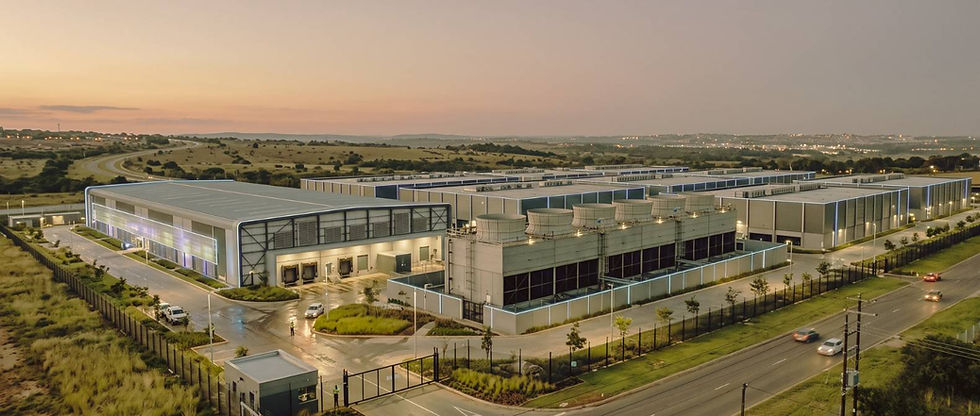
Then came a second thirst. Younger than dyeing by a century but growing FASTER than anything fashion has ever managed.
Artificial Intelligence runs on data centers. Data centers run on water, mostly for cooling the servers that power every prompt, every image, every model you have ever used. Global data centers consumed an estimated 1.2 trillion gallons of water last year alone, much of it directly tied to AI workloads. A United Nations University report projects that by 2030, AI-related water use could match the basic domestic water needs of over 1.3 billion people for a full year.
Some hyperscale facilities use as much water in a single day as an entire small city.
And the cruelest part is WHERE this is happening. Texas. Arizona. Parts of the Middle East. Places were already running short before the first server rack arrived. Places where the next drop was already spoken for.
Two industries. One ancient, one barely a decade into its real growth. Both pulling from the same shrinking river. Fashion needs water to color cloth. AI needs water to cool chips. The river does not care which one took it first.
Chapter Three: The Fabric That Was Never Part Of This Story
Here is where our story breaks from the pattern. Not because we tried harder. Because of what our raw material already is.
Inside our Phulera factory, we do not start with raw fiber. We start with post-industrial fabric offcuts that are ALREADY dyed, already finished, already carrying color from a previous production run that would otherwise go to landfill. The water cost of that color was paid once, upstream, before the fabric ever reached our gates.
We simply never pay it again.

No second dye bath. No second 150 liters per kilogram drawn from a water table that Rajasthan cannot spare. No new batch of chemical effluent added to a river system that is already 70% contaminated. This is not a sustainability campaign. It is just the mechanical reality of building fabric from rescued cloth instead of virgin cloth.
We did not start this company with a climate report in hand. We started this because throwing away usable fabric never made sense to her, long before anyone used the phrase ZERO WASTE in fashion. Twenty plus years later, that instinct turns out to be exactly the kind of manufacturing decision a water-stressed country and a water-stressed planet actually need from industry right now.
We Cannot Fix What AI Drinks. But We Refuse To Add To It.
Critics sometimes ask us whether patchwork is a real solution or just a feel-good story. Here is our answer.
We cannot solve AI's water bill. That fight belongs to cooling engineers, utility companies, and policymakers. It is theirs to win or lose.
What we can say, with twenty years of production behind it, is this. Every meter of patchwork fabric we ship to Europe, the USA, or Saudi Arabia is one meter that never required a fresh dye bath, never drew another 150 liters from an already stressed river, and never sent another batch of heavy metal effluent into water that 600 million Indians are already running short on.
Two industries drinking the planet dry. One ancient, one brand new. Both telling themselves the cost is someone else's problem.
We made a different choice. Not recently, not because of a trend, not because a buyer asked us to. We made it at the very beginning, because Dadiji believed that wasting anything, fabric or water or time, was simply not acceptable.
The world does not need more sustainability promises. It needs fewer dye baths, less untreated effluent, and industries that stop treating freshwater like it is infinite.
We have been running on fewer dye baths for over two decades, in a country that was always going to run thin. Turns out we were ahead of the crisis the whole time.
Got fabric waste sitting in your unit? We turn post-industrial offcuts into premium patchwork fabric every single day. If you have textile waste and want to put it back to work, contact us. Let us make something out of it.

$50
Product Title
Product Details goes here with the simple product description and more information can be seen by clicking the see more button. Product Details goes here with the simple product description and more information can be seen by clicking the see more button

$50
Product Title
Product Details goes here with the simple product description and more information can be seen by clicking the see more button. Product Details goes here with the simple product description and more information can be seen by clicking the see more button.
$50
Product Title
Product Details goes here with the simple product description and more information can be seen by clicking the see more button. Product Details goes here with the simple product description and more information can be seen by clicking the see more button.


Comments